The area enclosed by the curves \( xy + 4y = 16 \) and \( x + y = 6 \) is equal to:
\( 30 - 28\log_{e} 2 \)
\( 30 - 32\log_{e} 2 \)
\( 28 - 30\log_{e} 2 \)
\( 32 - 30\log_{e} 2 \)
Three points \( O(0,0), P(a,a^{2}), Q(-b,b^{2}), a>0, b>0 \), are on the parabola \( y=x^{2} \). Let \( S_{1} \) be the area of the region bounded by the line \( PQ \) and the parabola, and \( S_{2} \) be the area of the triangle \( OPQ \). If the minimum value of \( \dfrac{S_{1}}{S_{2}} \) is \( \dfrac{m}{n} \), \( \gcd(m,n)=1 \), then \( m+n \) is equal to ________.
Let \( A \) be the region enclosed by the parabola \( y^2=2x \) and the line \( x=24 \). Then the maximum area of the rectangle inscribed in the region \( A \) is __________.
The value of \( k \in \mathbb{N} \) for which the integral \( I_{n} = \int_{0}^{1} (1 - x^{k})^{n} \, dx, \ n \in \mathbb{N}, \) satisfies \( 147 I_{20} = 148 I_{21} \) is:
Let \( y=f(x) \) be a thrice differentiable function in \( (-5,5) \). Let the tangents to the curve \( y=f(x) \) at \( (1,f(1)) \) and \( (3,f(3)) \) make angles \( \dfrac{\pi}{6} \) and \( \dfrac{\pi}{4} \), respectively with positive \( x \)-axis. If \( 27 \int_{1}^{3} ( (f'(t))^{2} + 1 )\, f''(t) \, dt = \alpha + \beta \sqrt{3} \) where \( \alpha,\beta \) are integers, then the value of \( \alpha + \beta \) equals.
If the area of the region \( \{(x,y): 0 \le y \le m \) \(in \{2x,\, 6x - x^{2}\}\} \) is \( A \), then \( 12A \) is equal to __________.
If \( \displaystyle \int_{\pi/6}^{\pi/3} \sqrt{\,1-\sin 2x\,}\,dx = \alpha + \beta\sqrt{2} + \gamma\sqrt{3} \), where \( \alpha, \beta \) and \( \gamma \) are rational numbers, then \( 3\alpha + 4\beta - \gamma \) is equal to _________.
Let \( f(x) = \displaystyle\int_{0}^{x}\!\left(t + \sin\!\left(1 - e^{t}\right)\right)\,dt, \; x \in \mathbb{R} \). Then, \(\displaystyle \lim_{x \to 0} \frac{f(x)}{x^{3}} \) is equal to:
Let the area of the region \( \{(x,y): 0 \leq x \leq 3,\; 0 \leq y \leq \min\{x^{2}+2,\; 2x+2\}\} \) be \( A \). The \( 12A \) is equal to ______.
If the value of the integral \( \int_{-\pi/2}^{\pi/2} \left( \frac{x^2 \cos x}{1 + \pi^x} + \frac{1 + \sin^2 x}{1 + e^{\sin x^{2023}}} \right) \, dx = \frac{\pi}{4} (\pi + a) - 2 \), then the value of \( a \) is:
The sum of squares of all possible values of \( k \), for which area of the region bounded by the parabolas \( 2y^{2}=kx \) and \( 2y^{2}=2(y-x) \) is maximum, is equal to __________.
The integral \(\displaystyle \int_{1/4}^{3/4} \, \cos\!\left( 2\cot^{-1}\!\sqrt{\frac{1-x}{1+x}} \right) \, dx \) is equal to
The value of the integral \(\displaystyle\int_{-1}^{2} \log_e \left( x + \sqrt{x^2 + 1} \right) dx \) is
The area of the region enclosed by the parabolas \( y=4x-x^2 \) and \( 3y=(x-4)^2 \) is equal to:
Let \( f:\mathbb{R}\to\mathbb{R} \) be a function defined by \( f(x)=\dfrac{x}{\left(1+x^{4}\right)^{1/4}} \), and \( g(x)=f\!\left(f\!\left(f\!\left(f(x)\right)\right)\right) \). Then, \( \displaystyle18 \int_{0}^{\sqrt{2\sqrt{5}}} x^2 g(x) \, dx\) is equal to:
If \( f(t) =\displaystyle \int_{0}^{\pi} \frac{2x \, dx}{1 - \cos^{2} t \, \sin^{2} x} \), \( 0 < t < \pi \), then the value of \(\displaystyle \int_{0}^{\pi/2} \frac{\pi^{2} \, dt}{f(t)} \) equals \( \_\_\_\_\_\_ \).
Let \( \displaystyle \int_{\alpha}^{\log_{e}4}\frac{dx}{\sqrt{e^{x}-1}}=\frac{\pi}{6} \). Then \( e^{\alpha} \) and \( e^{-\alpha} \) are the roots of the equation:
If the area of the region \( \{(x,y): \frac{a}{x^2} \le y \le \frac{1}{x}, \, 1 \le x \le 2, \, 0 <a<1\}\) is (log\(_e2\))\(-\frac{1}{7}\) then the value of \(7a-3 \)is equal to:
\(\displaystyle \Big|\frac{120}{\pi^{2}} \int_{0}^{\pi} \dfrac{x^{2}\sin x \cos x}{\sin^{4}x+\cos^{4}x}\,dx\Big| \) is equal to ________.
\( \displaystyle \int_{0}^{\pi/4} \frac{\cos^2 x \,\sin^2 x}{\left(\cos^3 x + \sin^3 x\right)^2}\, dx \) is equal to:
Let \([t]\) denote the largest integer less than or equal to \( t \). If \( \displaystyle \int_{0}^{3}\Big(\,[x^{2}] + \Big[\dfrac{x^{2}}{2}\Big] \,\Big)dx = a + b\sqrt{2} - \sqrt{3} - \sqrt{5} + c\sqrt{6} - \sqrt{7} \), where then \( a,b,c \in \mathbb{Z} \), then \( a+b+c \) is equal to ______.
The value of $9 \int_{0}^{9} \left[ \sqrt{\frac{10x}{x+1}} \right] dx$, where $[t]$ denotes the greatest integer less than or equal to $t$, is
Let \(\displaystyle f(x)=\int_{0}^{x} g(t)\,\log_{e}\!\left(\dfrac{1-t}{1+t}\right)\,dt \), where \( g \) is a continuous odd function.If \(\displaystyle \int_{-\pi/2}^{\pi/2} \left( f(x) + \dfrac{x^{2}\cos x}{1+e^{x}} \right) dx = \left(\dfrac{\pi}{\alpha}\right)^{2}-\alpha \), then \( \alpha \) is equal to __________ .
Let $r_k = \frac{\int_{0}^{1}\left(1-x^7\right)^k dx}{\int_{0}^{1}\left(1-x^7\right)^{k+1} dx}, k \in \mathbb{N}$. Then the value of $\displaystyle \sum_{k=1}^{10}\frac{1}{7\left(r_k-1\right)}$ is equal to:
The value of \( \displaystyle \int_{-\pi}^{\pi} \frac{2y(1+\sin y)}{1+\cos^2 y}\,dy \) is:
If \( (a, b) \) be the orthocentre of the triangle whose vertices are \( (1, 2) \), \( (2, 3) \) and \( (3, 1) \), and \( I_1 = \int_a^b x \sin(4x - x^2)\, dx \), \( I_2 = \int_a^b \sin(4x - x^2)\, dx \), then \( 36 \dfrac{I_1}{I_2} \) is equal to:
One of the points of intersection of the curves $y = 1 + 3x - 2x^2$ and $y = \frac{1}{x}$ is $\left(\frac{1}{2}, 2\right)$. Let the area of the region enclosed by these curves be $\frac{1}{24}\left(l\sqrt{5} + m\right) - n \log_e(1 + \sqrt{5})$, where $l, m, n \in \mathbb{N}$. Then $l + m + n$ is equal to:
Let \( a \) and \( b \) be real constants such that the function \( f \) defined by be differentiable on \( \mathbb{R} \). Then, the value of \( \displaystyle \int_{-2}^{2} f(x)\,dx \) equals.
Let the slope of the line \( 45x + 5y + 3 = 0 \) be \( 27r_1 + \dfrac{9r_2}{2} \) for some \( r_1, r_2 \in \mathbb{R} \). Then \(\displaystyle\lim_{x \to 3} \left( \int_{3}^{x} \dfrac{8t^2}{\dfrac{3r_2 x}{2} - r_2 x^2 - r_1 x^3 - 3x} dt \right)\) is equal to __________.
The area (in sq. units) of the part of the circle \( x^2 + y^2 = 169 \) which is below the line \( 5x - y = 13 \) is \( \frac{\pi \alpha}{2\beta} - \frac{65}{2} + \frac{\alpha}{\beta} \sin^{-1}\!\left(\frac{12}{13}\right) \), where \( \alpha , \beta \) are coprime numbers. Then \( \alpha + \beta \) is equal to __________.
The integral \( \displaystyle \int_{0}^{\pi/4} \dfrac{136\sin x}{3\sin x + 5\cos x} \, dx \) is equal to:
Let the area of the region \( \{(x, y) : x - 2y + 4 \ge 0, \, x + 2y^{2} \ge 0, \, x + 4y^{2} \le 8, \, y \ge 0\} \) be \( \dfrac{m}{n} \), where \( m \) and \( n \) are coprime numbers. Then \( m + n \) is equal to ______________.
The value of the integral \( \displaystyle \int_{0}^{\pi/4} \dfrac{x\,dx}{\sin^{4}(2x)+\cos^{4}(2x)} \) equals:
If \( \int_{0}^{\pi/4} \frac{\sin^{2} x}{1 + \sin x \cos x} \, dx = \frac{1}{a} \log_{e}\!\left(\frac{a}{3}\right) + \frac{\pi}{b\sqrt{3}} \) where \( a, b \in \mathbb{N} \), then \( a + b \) is equal to __________.
Let \( \alpha |x|=|y|e^{xy-\beta},\ \alpha,\beta\in \mathbb{N} \) be the solution of the differential equation \( x\,dy-y\,dx+xy(x\,dy+y\,dx)=0,\ y(1)=2 \). Then \( \alpha+\beta \) is equal to _________.
Let \( \mathrm{\beta}(m,n) =\displaystyle \int_{0}^{1} x^{m-1}(1-x)^{\,n-1}\,dx ; \, m,n>0 \). If \( \displaystyle \int_{0}^{1} (1-x^{10})^{20}\,dx = a \times \mathrm{\beta}(b,c) \), then \( 100(a+b+c) \) equals ______.
The value of \( \displaystyle \lim_{n \to \infty} \sum_{k=1}^{n} \dfrac{n^3}{(n^2 + k^2)(n^2 + 3k^2)} \) is:
Let \( f:\mathbb{R}\to\mathbb{R} \) be defined as \( f(x)=a e^{2x}+b e^{x}+c x \). If \( f(0)=-1 \), \( f'(\log_e 2)=21 \) and \(\displaystyle \int_{0}^{\log_e 4}\big(f(x)-c x\big)\,dx=\dfrac{39}{2} \), then the value of \( |a+b+c| \) equals.
If the integral $525 \int_{0}^{\frac{\pi}{2}} \sin 2x \cos^{\frac{11}{2}} x \left( 1 + \cos^{\frac{5}{2}} x \right)^{\frac{1}{2}} dx$ is equal to $(n\sqrt{2} - 64)$, then $n$ is equal to _________.
The value of \( \displaystyle \int_{0}^{1} \left( 2x^3 - 3x^2 - x + 1 \right)^\dfrac{1}{3} dx \) is equal to:
The area enclosed between the curves \( y = x|x| \) and \( y = x - |x| \) is:
The area (in square units) of the region bounded by the parabola \( y^{2} = 4(x - 2) \) and the line \( y = 2x - 8 \), is:
Let the area of the region enclosed by the curves \( y = 3x \), \( 2y = 27 - 3x \) and \( y = 3x - x\sqrt{x} \) be \( A \). Then \( 10A \) is equal to:
The area of the region enclosed by the parabola \( (y-2)^2=x-1 \), the line \( x-2y+4=0 \) and the positive coordinate axes is ________.
Let the area of the region enclosed by the curve \( y = \min(\sin x, \cos x) \) and the x-axis between \( x = -\pi \) to \( x = \pi \) be \( A \). Then \( A^{2} \) is equal to _______.
The area (in square units) of the region enclosed by the ellipse \( x^{2}+3y^{2}=18 \) in the first quadrant below the line \( y=x \) is
If \( \int_{-\pi/2}^{\pi/2}\frac{8\sqrt{2}\cos \,dx}{(1+e^{\sin x})(1+\sin^4 x)}=\alpha\pi+\beta\log_e(3+2\sqrt{2}) \), where \( \alpha,\,\beta \) are integers, then \( \alpha^2+\beta^2 \) equals ______.
Let \( f:\mathbb{R}\to\mathbb{R} \) be a function defined by \( f(x)=\frac{4^x}{4^x+2} \) and \( M=\int_{f(a)}^{f(1-a)} x \sin^4(x(1-x))\,dx \) , \( N=\int_{f(a)}^{f(1-a)} \sin^4(x(1-x))\,dx \) ; \( a \ne \frac{1}{2} \). If \( \alpha M=\beta N \), \( \alpha,\beta \in \mathbb{N} \), then the least value of \( \alpha^2+\beta^2 \) is equal to ______
The area of the region enclosed by the parabolas \( y = x^{2} - 5x \) and \( y = 7x - x^{2} \) is ____________.
Let \( y=y(x) \) be the solution curve of the differential equation \( \sec y\,\dfrac{dy}{dx}+2x\sin y=x^{3}\cos y,\; y(1)=0 \). Then \( y(\sqrt{3}) \) is equal to:

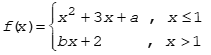 be differentiable on \( \mathbb{R} \). Then, the value of \( \displaystyle \int_{-2}^{2} f(x)\,dx \) equals.