The integral \( \dfrac{24}{\pi} \displaystyle \int_{0}^{\sqrt{2}} \dfrac{(2 - x^2)\, dx}{(2 + x^2)\sqrt{4 + x^4}} \) is equal to _______.
If \( f:\mathbb{R}\to\mathbb{R} \) is given by \( f(x)=x+1 \), then the value of \( \displaystyle \lim_{n \to \infty} \dfrac{1}{4} \left[ f(0) + f\left(\dfrac{5}{n}\right) + f\left(\dfrac{10}{n}\right) + ... + f\left(\dfrac{5(n - 1)}{n}\right) \right],\) is:
If \( \displaystyle \lim_{x \to 0} \frac{\sin^{-1}x - \tan^{-1}x}{3x^3} \) is equal to \( L \), then the value of \( (6L + 1) \) is:
If \(\displaystyle \int \frac{1}{\sqrt[5]{(x-1)^4 (x+3)^6}} \, dx = A \left( \frac{\alpha x - 1}{\beta x + 3} \right)^B + C \), where \( C \) is the constant of integration, then the value of \( \alpha + \beta + 20AB \) is __________.
For \( x \in \left( -\frac{\pi}{2}, \frac{\pi}{2} \right) \), if \( y(x) = \int \frac{cosec x + \sin x}{cosec x \sec x + \tan x \sin^2 x} \, dx \), and \( \displaystyle \lim_{x \to \left( \frac{\pi}{2} \right)^{-}} y(x) = 0 \) then \( y\left( \frac{\pi}{4} \right) \) is equal to:
For \( \alpha, \beta, \gamma, \delta \in \mathbb{N} \), if \( \displaystyle \int \left( \left( \dfrac{x}{e} \right)^{2x} + \left( \dfrac{e}{x} \right)^{2x} \right) \log_e x \, dx = \dfrac{1}{\alpha} \left( \dfrac{e}{x} \right)^{\beta x} - \dfrac{1}{\gamma} \left( \dfrac{e}{x} \right)^{\delta x} + C \), where \( e=\displaystyle \sum_{n=0}^{\infty}\dfrac{1}{n!} \) and \( C \) is constant of integration, then \( \alpha+2\beta+3\gamma-4\delta \) is equal to:
The integral \( \int \frac{(2x-1)\cos\!\left(\sqrt{(2x-1)^2+5}\right)}{\sqrt{4x^2-4x+6}}\,dx \) is equal to: (where \( c \) is a constant of integration)
Let $g:(0,\infty) \rightarrow R$ be a differentiable function such that
$\int \left( \frac{x(\cos x - \sin x)}{e^x + 1} + \frac{g(x)(e^x + 1 - xe^x)}{(e^x + 1)^2} \right) dx = \frac{x \, g(x)}{e^x + 1} + c \text{ for all } x > 0 \text{, where } c \text{ is an arbitrary constant. Then :}$
Let \( I(x)=\displaystyle \int \frac{dx}{(x-11)^{\frac{11}{13}}(x+15)^{\frac{5}{13}}} \). If \( I(37)-I(24)=\frac{1}{4}\left(\frac{1}{b^{\frac{1}{13}}}-\frac{1}{c^{\frac{1}{13}}}\right) \), \( b,c\in \mathbb{N} \), then \( 3(b+c) \) is equal to:
If the area of region \( \{(x,y)\,:\, 1 + x^{2} \le y \le \min\{x+7,\, 11-3x\}\} \) is \( A \), then \( 3A \) equal to:
Let \( f(\alpha) \) denote the area of the region in the first quadrant bounded by \( x=0, x=1, y^{2}=x \) and \( y=|\alpha x-5|-|1-\alpha x|+\alpha x^{2} \). Then \( \left(f(0)+f(1)\right) \) is equal to:
If \(\displaystyle f(x)=\int \frac{1}{x^{1/4}\left(1+x^{1/4}\right)}\,dx ,\ f(0)=-6 \), then \( f(1) \) is equal to:
If $\int \left( \frac{1 - 5\cos^2 x}{\sin^5 x \cos^2 x} \right) dx = f(x) + C$, where $C$ is the constant of integration, then $f\left(\frac{\pi}{6}\right) - f\left(\frac{\pi}{4}\right)$ is equal to:
If \( \displaystyle \int e^x \left( \frac{x\sin^{-1}x}{\sqrt{1-x^2}} + \frac{\sin^{-1}x}{(1-x^2)^{3/2}} + \frac{x}{1-x^2} \right) dx = g(x) + C \), where \( C \) is the constant of integration, then \(\displaystyle g\left(\frac{1}{2}\right) \) equals:
Let \( f(x) = \int \frac{(2 - x^2)e^x}{\sqrt{1 + x}(1 - x)^{3/2}} \, dx \). If \( f(0) = 0 \), then \( f\!\left(\frac{1}{2}\right) \) is equal to:
Let \( I(x) = \displaystyle \int \frac{(x+1)}{x(1 + x e^{x})^{2}}\,dx,\; x > 0. \) If \( \displaystyle \lim_{x \to \infty} I(x) = 0 \), then \( I(1) \) is equal to:
If $\int (\sin x)^{-\frac{11}{2}} (\cos x)^{-\frac{5}{2}} dx = -\frac{p_1}{q_1}(\cot x)^{\frac{9}{2}} - \frac{p_2}{q_2}(\cot x)^{\frac{5}{2}} - \frac{p_3}{q_3}(\cot x)^{\frac{1}{2}} + \frac{p_4}{q_4}(\cot x)^{-\frac{3}{2}} + C$, where $p_i$ and $q_i$ are positive integers with $\gcd(p_i, q_i)=1$ for $i=1,2,3,4$ and $C$ is the constant of integration, then $\frac{15p_1p_2p_3p_4}{q_1q_2q_3q_4}$ is equal to _________.
If \(\displaystyle \int_{-0.15}^{0.15} \left|100x^2-1\right| dx=\frac{k}{3000} \), then \( k \) is equal to ____.
Let \( \int \frac{2-\tan x}{3+\tan x}\,dx=\frac{1}{2}\left(\alpha x+\log_{e}\left| \beta\sin x+\gamma\cos x \right|\right)+C \), where \( C \) is the constant of integration. Then \( \alpha+\frac{\gamma}{\beta} \) is equal to:
If \( \int \frac{2e^{x} + 3e^{-x}}{4e^{x} + 7e^{-x}} \, dx = \frac{1}{14}\left( ux + v \log_{e}(4e^{x} + 7e^{-x}) \right) + C \), where \( C \) is a constant of integration, then \( u + v \) is equal to ________.
\( f(x)=\displaystyle \int \dfrac{7x^{10}+9x^{8}}{(1+x^{2}+2x^{9})^{2}} \, dx,\ x>0, \ \lim_{x\to 0} f(x)=0 \) and \( f(1)=\dfrac{1}{4} \). . and \( B=\operatorname{adj}(\operatorname{adj}A) \) be such that \( |B|=81 \), then \( \alpha^{2} \) is equal to:
Let \( I(x) = \int \frac{6}{\sin^2 x \, (1-\cot x)^2} \, dx \). If \( I(0) = 3 \), then \( I\!\left(\frac{\pi}{12}\right) \) is equal to:
The function \( f(x)=\left|x^{2}-2x-3\right|\cdot e^{\left|9x^{2}-12x+4\right|} \) is not differentiable at exactly:
Let \( I(x) = \int \dfrac{x^{2}\left(x\sec^{2}x + \tan x\right)}{(x \tan x + 1)^{2}} \, dx \). If \( I(0) = 0 \), then \( I\!\left(\dfrac{\pi}{4}\right) \) is equal to:
If \( \int \dfrac{dx}{(x^2 + x + 1)^2} = a \tan^{-1}\!\left( \dfrac{2x + 1}{\sqrt{3}} \right) + b \left( \dfrac{2x + 1}{x^2 + x + 1} \right) + C,\ x > 0 \) where \( C \) is the constant of integration, then the value of \( 9(\sqrt{3}\,a + b) \) is equal to __________.
If $\int \sqrt{\sec 2x - 1} \, dx = \alpha \log_e \left| \cos 2x + \beta + \sqrt{\cos 2x \left( 1 + \cos \frac{1}{\beta}x \right)} \right| + \text{constant}$, then $\beta - \alpha$ is equal to ________.
Let \( \int x^3 \sin x \, dx = g(x) + C \), where \( C \) is the constant of integration. If \(\displaystyle 8\Big(g\!\left(\frac{\pi}{2}\right) + g'\!\left(\frac{\pi}{2}\right)\Big) = \alpha \pi^3 + \beta \pi^2 + \gamma, \, \alpha,\beta,\gamma \in \mathbb{Z} \), then \( \alpha + \beta - \gamma \) equals:
If \( \int \dfrac{(x^2+1)e^x}{(x+1)^2}\,dx = f(x)e^x + C \), where \( C \) is a constant, then \( \dfrac{d^3 f}{dx^3} \) at \( x=1 \) is equal to:
Let \( f(t)=\int \frac{(1-\sin (\log_{e} t))}{(1-\cos (\log_{e} t))}\,dt,\; t>1 \). If \( f\!\left(e^{\pi/2}\right)=-e^{-\pi/2} \) and \( f\!\left(e^{\pi/4}\right)=\alpha e^{\pi/4} \), then \( \alpha \) equals:
If \( f(x) = \int \frac{5x^8 + 7x^6}{(x^2 + 1 + 2x^7)^2} \, dx , \; (x \geq 0), \; f(0) = 0 \) and \( f(1) = \frac{1}{k} \), then the value of \( K \) is ____________.
Let \( f:\mathbb{R}\to \mathbb{R} \) be a differentiable function such that \( f\!\left(\frac{x+y}{3}\right)=\frac{f(x)+f(y)}{3} \) for all \( x,y\in \mathbb{R} \), and \( f'(0)=3 \). Then the minimum value of the function \( g(x)=3+e^{x}f(x) \), is:
\( \int \frac{\left(\sqrt{1+x^{2}}+x\right)^{10}}{\left(\sqrt{1+x^{2}}-x\right)^{9}} \, dx = \frac{1}{m}\left(\left(\sqrt{1+x^{2}}+x\right)^{n}\left[n\sqrt{1+x^{2}}-x\right]\right)+C \) If where \( C \) is the constant of Integration and \( m , n \in \mathbb{N} \) then \( m+n \) is equal to ______________.
Let \( f(x)=\displaystyle\int\limits \dfrac{dx}{(3+4x^2)\sqrt{4-3x^2}},\ |x|<\frac{2}{\sqrt{3}} \). If \( f(0)=0 \) and \( f(1)=\dfrac{1}{\alpha\beta}\tan^{-1}\!\left(\dfrac{\alpha}{\beta}\right),\ \alpha,\beta>0 \), then \( \alpha^2+\beta^2 \) is equal to __________.
Let \( f(x)=\displaystyle \int \left(\dfrac{16x+24}{x^{2}+2x-15}\right)dx \). If \( f(4)=14\log_{e}(3) \) and \( f(7)=\log_{e}\!\left(2^{\alpha}\cdot3^{\beta}\right),\,\alpha,\beta\in\mathbb{N} \), then \( \alpha+\beta \) is equal to:
The integral \(\displaystyle \int \frac{(x^8-x^2)\,dx}{\left(x^{12}+3x^6+1\right)\tan^{-1}\!\left(x^3+\frac{1}{x^3}\right)} \) is equal to:
Let \( \alpha \) be the area of the larger region bounded by the curve \( y^{2} = 8x \) and the \( y = x \) and \( x = 2 \), which lies in the first quadrant. Then the value of \( 3\alpha \) is equal to ________.
If \( \int{}^{} \frac{1}{x}\sqrt{\frac{1-x}{1+x}} \, dx = g(x) + c, \, g(1) = 0 \), then \( g\!\left(\tfrac{1}{2}\right) \) is equal to:
The integral \( \int\!\left(\left(\dfrac{x}{2}\right)^{x}+\left(\dfrac{2}{x}\right)^{x}\right)\log_{2}x\,dx \) is equal to:
If \( \displaystyle \int \left( \frac{1}{x} + \frac{1}{x^3} \right) \left( \sqrt[23]{3x^{-24} + x^{-26}} \right) dx = -\frac{\alpha}{3(\alpha + 1)} \left( 3x^\beta + x^\gamma \right)^{\frac{\alpha + 1}{\alpha}} + C, \quad x > 0, \, (\alpha, \beta, \gamma \in \mathbb{Z}) \), where \( C \) is the constant of integration, then \( \alpha+\beta+\gamma \) is equal to __________.
Let \( f(x) = \int x^{3}\sqrt{3 - x^{2}} \, dx \). If \( 5 f(\sqrt{2}) = -4 \), then \( f(1) \) is equal to:
The integral \( \int_{0}^{\pi} \frac{8x \, dx}{4\cos^{2} x + \sin^{2} x} \) is equal to:
\( If \int \dfrac{\sin x}{\sin^{3}x+\cos^{3}x}\,dx=\alpha \log_{e}\!\left|1+\tan x\right|+\beta \log_{e}\!\left|1-\tan x+\tan^{2}x\right|+\gamma \tan^{-1}\!\left(\dfrac{2\tan x-1}{\sqrt{3}}\right)+C \), when \( C \) is constant of integration, then the value of \( 18(\alpha+\beta+\gamma^{2}) \) is ______.
Let \( f(x)=\min\{[x-1],[x-2],\ldots,[x-10]\} \) where \( [t] \) denotes the greatest integer \( \le t \). Then \( \displaystyle \int\limits_{0}^{10} f(x)\,dx+\displaystyle \int\limits_{0}^{10} (f(x))^{2}\,dx+\displaystyle \int\limits_{0}^{10} |f(x)|\,dx \) is equal to ________.
Let \( f(x) \) be a function satisfying \( f(x) + f(\pi - x) = \pi^2, \forall x \in \mathbb{R} \). Then \(\displaystyle \int_{0}^{\pi} f(x)\sin x \, dx \) is equal to:
If \( \displaystyle \int cosec^{5}x\,dx=\alpha \cot x \ x\ cosec\ x\left(cosec^{2}x+\tfrac{3}{2}\right)+\beta \log_{e}\left|\tan \tfrac{x}{2}\right|+C \) where \( \alpha,\beta\in\mathbb{R} \) and \( C \) is the constant of integration, then the value of \( 8{(\alpha+\beta)} \) equals __________.

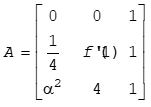 . and \( B=\operatorname{adj}(\operatorname{adj}A) \) be such that \( |B|=81 \), then \( \alpha^{2} \) is equal to: