11 questions from 2026
Consider the following three statements for the function \( f:(0,\infty)\to \mathbb{R} \) defined by \( f(x)=|\log_e x|-|x-1| \):(\( \mathrm{I} \)) \( f \) is differentiable at all \( x>0 \).(\( \mathrm{II} \)) \( f \) is increasing in \( (0,1) \).(\( \mathrm{III} \)) \( f \) is decreasing in \( (1,\infty) \).Then:
The number of critical points of the function in the interval \( (-2\pi,2\pi) \) is equal to:
Let be a singular matrix. Let \( f(x)=\int_{0}^{x}(t^{2}+2t+3)\,dt, \; x\in [\,1,\alpha\,] \). If \( M \) and \( m \) are respectively the maximum and the minimum values of \( f \) in \( [\,1,\alpha\,] \), then \( 3(M-m) \) is equal to:
Let \( f(x) = x^{2025} - x^{2000}, \ x \in [0,1] \) and the minimum value of the function \( f(x) \) in the interval \( [0,1] \) be \( (80)^{80}(n)^{-81} \). Then \( n \) is equal to:
Let \( f(x) \) be a polynomial of degree \( 5 \), and have extrema at \( x=1 \) and \( x=-1 \). If \( \displaystyle \lim_{x\to0}\left(\dfrac{f(x)}{x^{3}}\right)=-5 \), then \( f(2)-f(-2) \) is equal to:
Consider the system of linear equations in \( x,y,z \):\( x + 2y + tz = 0, \)\( 6x + y + 5tz = 0, \)\( 3x + t^2y + f(t)z = 0, \)where \( f:\mathbb{R} \to \mathbb{R} \) is a differentiable function. If this system has infinitely many solutions for all \( t \in \mathbb{R} \), then \( f \)
Let \( f \) be a real polynomial of degree \( n \) such that \( f(x)=f'(x)f''(x) \), for all \( x\in\mathbb{R} \). If \( f(0)=0 \), then \( 36\left(f'(2)+f''(2)+\int_{0}^{2}f(x)\,dx\right) \) is equal to:
Let \( f(x) = x^{3} + x^{2} f'(1) + 2x \, f''(2) + f^{''' }(3), \ x \in \mathbb{R} \). Then the value of \( f'(5) \) is:
Let \( \dfrac{x^2}{f(a^2+7a+3)}+\dfrac{y^2}{f(3a+15)}=1 \) represent an ellipse with major axis along \( y \)-axis, where \( f \) is a strictly decreasing positive function on \( \mathbb{R} \). If the set of all possible values of \( a \) is \( \mathbb{R}-[\alpha,\beta] \), then \( \alpha^2+\beta^2 \) is equal to:
Let \( f(x) \) and \( g(x) \) be twice differentiable functions satisfying \( f''(x)=g''(x) \) for all \( x\in \mathbb{R} \), \( f'(1)=2g'(1)=4 \) and \( g(2)=3f(2)=9 \). Then \( f(25)-g(25) \) is equal to:
Let \( (2\alpha,\alpha) \) be the largest interval in which the function \( f(t) = \frac{|t + 1|}{t^2} , \, t < 0 \) , is strictly decreasing. Then the local maximum value of the function \( g(x) = 2\log_{e}(x - 2) + \alpha x^2 + 4x - \alpha , \, x > 2 , \) is ________.
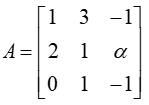 be a singular matrix. Let \( f(x)=\int_{0}^{x}(t^{2}+2t+3)\,dt, \; x\in [\,1,\alpha\,] \). If \( M \) and \( m \) are respectively the maximum and the minimum values of \( f \) in \( [\,1,\alpha\,] \), then \( 3(M-m) \) is equal to:

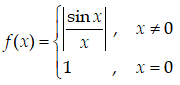 in the interval \( (-2\pi,2\pi) \) is equal to: