22 questions from 2021
If \( a_{r}=\cos \frac{2r\pi }{9}+i \sin \frac{2r\pi }{9},\ r=1,2,3,\ldots,\ i=\sqrt{-1} \), then the determinant is equal to:
If the real part of the complex number \( (\,1-\cos\theta+2i\sin\theta\,)^{-1} \) is \( \dfrac{1}{5} \) for \( \theta \in (0,\pi) \), then the value of the integral \( \displaystyle\int\limits_{0}^{\theta}\sin x\,dx \) is equal to:
If \( z \) and \( \omega \) are two complex numbers such that \( |z\omega|=1 \) and \( \arg(z)-\arg(\omega)=\dfrac{3\pi}{2} \), then \( \arg\!\left(\dfrac{1-2\bar z\omega}{1+3\bar z\omega}\right) \) is:(Here \( \arg(z) \) denotes the principal argument of complex number \( z \))
The equation \( \arg \left( \frac{z-1}{z+1} \right) = \frac{\pi}{4} \) represents a circle with:
Let \( \mathbb{C} \) be the set of all complex numbers. Let \( S_1 = \{ z \in \mathbb{C} \mid |z - 3 - 2i|^2 = 8 \} \), \( S_2 = \{ z \in \mathbb{C} \mid \operatorname{Re}(z) \ge 5 \} \) and \( S_3 = \{ z \in \mathbb{C} \mid |z - \overline{z}| \ge 8 \} \). Then the number of elements in \( S_1 \cap S_2 \cap S_3 \) is equal to:
Let \( n \) denote the number of solutions of the equation \( z^2+3\bar{z}=0 \), where \( z \) is a complex number. Then the value of \( \displaystyle \sum_{k=0}^{\infty}\frac{1}{n^k} \) is equal to:
If for the complex numbers \( z \) satisfying \( |z - 2 - 2i| \le 1 \), the maximum value of \( |3iz + 6| \) is attained at \( a + ib \), then \( a + b \) is equal to:
Let \( S_{1}, S_{2} \) and \( S_{3} \) be three sets defined as : \( S_{1} = \{ z \in \mathbb{C} : |z - 1| \le \sqrt{2} \} \) \( S_{2} = \{ z \in \mathbb{C} : \mathrm{Re}((1-i)z) \ge 1 \} \) \( S_{3} = \{ z \in \mathbb{C} : \mathrm{Im}(z) \le 1 \} \) Then the set \( S_{1} \cap S_{2} \cap S_{3} \) :
If \( S = \left\{ z \in \mathbb{C} : \dfrac{z - i}{z + 2i} \in \mathbb{R} \right\} \), then:
Let \( C \) be the set of all complex numbers. Let \( S_1=\{z\in \mathbb{C}: |z-2|\leq 1\} \) and \( S_2=\{z\in \mathbb{C}: z(1+i)+\bar{z}(1-i)\geq 4\} \) Then, the maximum value of \( \left|z-\dfrac{5}{2}\right|^2 \) for \( z\in S_1\cap S_2 \) is equal to :
The least value of \( |z| \) where \( z \) is complex number which satisfies the inequality \( \displaystyle \exp\left(\frac{(|z| + 3)(|z| - 1)}{||z| + 1|}\log_e 2\right) \ge \log_{\sqrt{2}}|5\sqrt{7} + 9i|, \, i = \sqrt{-1} \), is equal to:
If \( (\sqrt{3} + i)^{100} = 2^{99}(p + iq) \), then \( p \) and \( q \) are roots of the equation:
If \( z \) is a complex number such that \( \dfrac{z-i}{z-1} \) is purely imaginary, then the minimum value of \( \left| z-(3+3i) \right| \) is:
Let \( z_1, z_2 \) be the roots of the equation \( z^2 + a z + 12 = 0 \) and \( z_1, z_2 \) form an equilateral triangle with origin. Then, the value of \( |a| \) is ____________.
Let \( z_1 \) and \( z_2 \) be two complex numbers such that \( \arg(z_1-z_2)=\dfrac{\pi}{4} \) and \( z_1,\,z_2 \) satisfy the equation \( |z-3|=\operatorname{Re}(z) \). Then the imaginary part of \( z_1+z_2 \) is equal to ______.
Let \( z=\frac{1-i\sqrt{3}}{2} \), \( i=\sqrt{-1} \). Then the value of \( 21+\left(z+\frac{1}{z}\right)^{3}+\left(z^{2}+\frac{1}{z^{2}}\right)^{3}+\left(z^{3}+\frac{1}{z^{3}}\right)^{3}+\ldots+\left(z^{21}+\frac{1}{z^{21}}\right)^{3} \) is ________.
Let a complex number be \( w = 1 - \sqrt{3} i \). Let another complex \( z \) be such that \( |zw| = 1 \) and \( \arg(z) - \arg w = \dfrac{\pi}{2} \). Then the area of the triangle with vertices origin, \( z \) and \( w \) is equal to:
If the real part of the complex number \( z = \dfrac{3 + 2 i \cos \theta}{1 - 3 i \cos \theta}, \ \theta \in \left(0, \dfrac{\pi}{2}\right) \) is zero, then the value of \( \sin^{2} 3\theta + \cos^{2} \theta \) is equal to ______.
If the equation $a|z|^2 + \overline{\bar{\alpha}z + \alpha\bar{z}} + d = 0$ represents a circle where $a, d$ are real constants then which of the following condition is correct?
Let \( i = \sqrt{-1} \). If \( \displaystyle \frac{(-1 + i\sqrt{3})^{21}}{(1 - i)^{24}} + \frac{(1 + i\sqrt{3})^{21}}{(1 + i)^{24}} = k\), and \( n = [\,|k|\,] \) be the greatest integral part of \( |k| \). Then \( \displaystyle \sum_{j=0}^{n+5} (j+5)^2 - \sum_{j=0}^{n+5} (j+5) \) is equal to ________.
The area of the triangle with vertices \( A(z) \), \( B(iz) \) and \( C(z + iz) \) is:
The least positive integer \( n \) such that \( \dfrac{(2i)^{n}}{(1-i)^{\,n-2}} \), \( i=\sqrt{-1} \), is a positive integer, is __________.

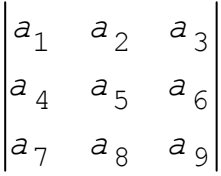 is equal to: