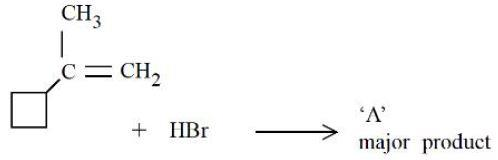
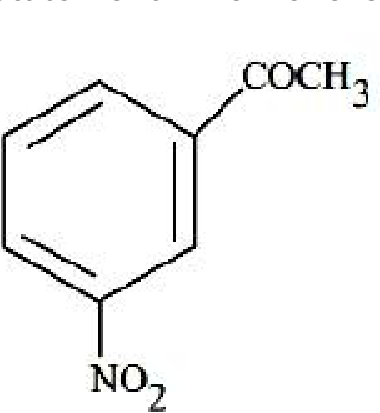
Major product of the following reaction is:
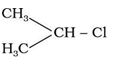
Number of electrophilic centres in the given compound is ____________
\( 0.01 \) mole of an organic compound \( (X) \) containing \( 10\% \) hydrogen, on complete combustion produced \( 0.9 \, \text{g} \) \( \mathrm{H_2O} \). Molar mass of \( (X) \) is ________ \( \text{g mol}^{-1} \).
In the given reaction sequence, the major product 'C' is:
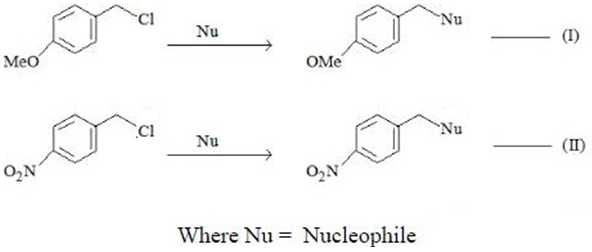
Given below are two statements:Statement I: In , the carbocation is stabilized by \( +R \) effect of \( -\mathrm{OCH}_3 \) group.Statement II: In , the carbanion is stabilized by \( -R \) effect of \( -\mathrm{NO}_2 \) group.In the light of the above statements, choose the correct answer from the options given below:
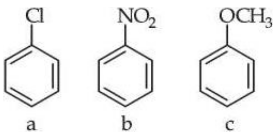
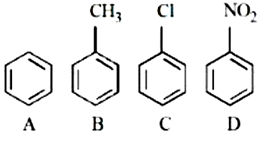
Arrange the following compounds in increasing order of rate of aromatic electrophilic substitution reaction
Given below are two statements:Statement I: The conversion proceeds well in the less polar medium.Statement II: The conversion proceeds well in the more polar medium.In the light of the above statements, choose the correct answer from the options given below:
Increasing order of electron withdrawing power of following functional groups is:\( a\!:\!-\!\mathrm{CN} \)\( b\!:\!-\!\mathrm{COOH} \)\( c\!:\!-\!\mathrm{NO_2} \)\( d\!:\!-\!\mathrm{I} \)
Identify the incorrect option from the following:
Maximum number of isomeric monochloro derivatives which can be obtained from \( 2, 2, 5, 5 \)-tetramethylhexane by chlorination is ________________.
Which among the following is the strongest Bronsted base?
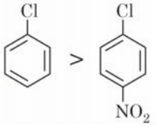
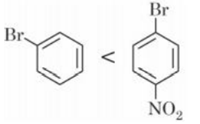
Identify the correct order of reactivity for the following pairs towards the respective mechanism.(A) (B) (C) Electrophilic substitution (D) Nucleophilic substitution Choose the correct answer from the options given below:
Arrange the following in increasing order of reactivity towards nitration. (a) p-xylene (b) bromobenzene (c) mesitylene (d) nitrobenzene (e) benzene Choose the correct answer from the options given below.
The standard reduction potentials at \( 298 \, \text{K} \) for the following half cells are given below:\( \mathrm{NO_3^-} + 4\mathrm{H^+} + 3e^- \rightarrow \mathrm{NO(g)} + 2\mathrm{H_2O} \quad E^\ominus= 0.97 \, \text{V} \)\( \mathrm{V^{2+}}(\mathrm{aq}) + 2e^- \rightarrow \mathrm{V} \quad E^\ominus = -1.19 \, \text{V} \)\( \mathrm{Fe^{3+}}(\mathrm{aq}) + 3e^- \rightarrow \mathrm{Fe} \quad E^\ominus = -0.04 \, \text{V} \)\( \mathrm{Ag^{+}}(\mathrm{aq}) + e^- \rightarrow \mathrm{Ag(s)} \quad E^\ominus = 0.80 \, \text{V} \)\( \mathrm{Au^{3+}}(\mathrm{aq}) + 3e^- \rightarrow \mathrm{Au(s)} \quad E^\ominus = 1.40 \, \text{V} \)The number of metal(s) which will be oxidized by \( \mathrm{NO_3^-} \) in aqueous solution is ________ .
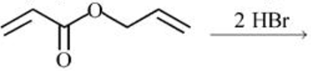
Major product P of above reaction, is:
Given below are two statements:
Statement I: `C--Cl' bond is stronger in $\mathrm{CH_2=CH-Cl}$ than $\mathrm{CH_3-CH_2-Cl}$.
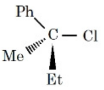
Statement II: The given optically active molecule,
on hydrolysis gives a solution that can rotate the plane polarized light.
In the light of the above statements, choose the correct answer from the options given below.
The correct decreasing order of priority of functional groups in naming an organic compound as per IUPAC system of nomenclature is:
Experimentally reducing a functional group cannot be done by which one of the following reagents?
Consider the following compounds: Arrange these compounds in the increasing order of reactivity with nitrating mixture.
When \( 81.0 \, \text{g} \) of aluminium is allowed to react with \( 128.0 \, \text{g} \) of oxygen gas, the mass of aluminium oxide produced in grams is ________. (Nearest integer)Given: Molar mass of Al is \( 27.0 \, \text{g mol}^{-1} \)Molar mass of O is \( 16.0 \, \text{g mol}^{-1} \)
Given below are two statements:Statement-I : will undergo alkaline hydrolysis at a faster rate than Statement-II : intramolecular substitution takes place first by involving lone pair of electrons on nitrogen.In the light of the above statements, choose the most appropriate answerfrom the options given below:
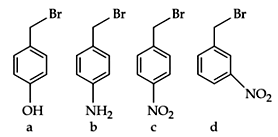
The correct order of reactivity of the following benzyl halides towards reaction with \( \mathrm{KCN} \) is:
In Dumas method for the estimation of \( \mathrm{N_2} \), the sample is heated with copper oxide and the gas evolved is passed over:
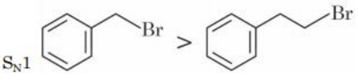
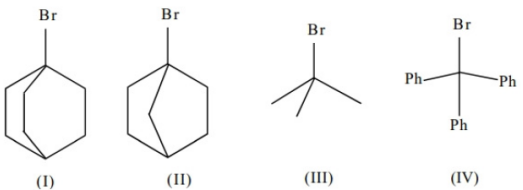
The correct order of the rate of reaction of the following reactants with nucleophile by \( \mathrm{S_{N}1} \) mechanism is: (Given: Structures I and II are rigid)
The stable carbocation formed in the above reaction is:
Which among the following purification methods is based on the principle of “Solubility” in two different solvents?
In the estimation of bromine, \( 0.5 \, \text{g} \) of an organic compound gave \( 0.40 \, \text{g} \) of silver bromide. The percentage of bromine in the given compound is ________% (nearest integer) (Relative atomic masses of \( \mathrm{Ag} \) and \( \mathrm{Br} \) are \( 108 \, \text{u} \) and \( 80 \, \text{u} \), respectively).
The correct order of reactivity in electrophilic substitution reaction of the following compounds is:
Compound from the following that will not produce precipitate on reaction with \( \mathrm{AgNO_3} \) is:
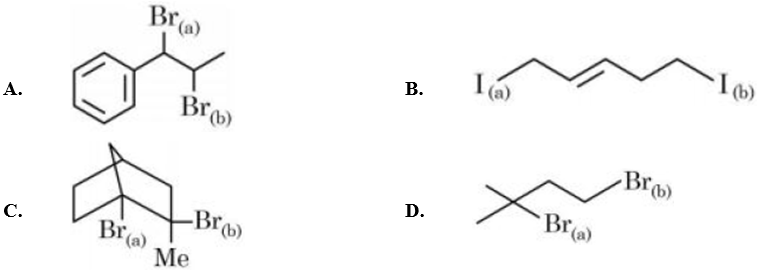
Choose the halogen which is most reactive towards \( \mathrm{S_{N}1} \) reaction in the given compounds (A, B, C and D)?
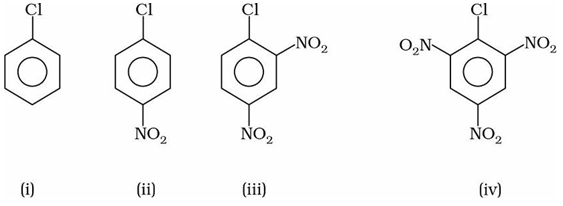
The correct order of the following compounds showing increasing tendency towards nucleophilic substitution reaction is:
\( \text{RMgI} \) when treated with ice cold water liberated a gas which occupied \( 1.4 \, \text{dm}^3/\text{g} \) at STP. The gas produced is further reacted with iodine in presence of \( \text{HIO}_3 \), to give compound (X). Compound (X) in presence of \( \text{Na} \) and dry ether produced compound (Y). Molar mass of compound (Y) is __________ \( \text{g mol}^{-1} \). (Nearest integer)
The correct order of reactivity of \( \mathrm{CH_3Br} \) in methanol with the following nucleophiles is: \( \mathrm{F^-} \), \( \mathrm{I^-} \), \( \mathrm{C_2H_5O^-} \) and \( \mathrm{C_6H_5O^-} \)
\( 2 \)-Methyl propyl bromide reacts with \( \mathrm{C_2H_5O^-} \) and gives ‘A’ whereas on reaction with \( \mathrm{C_2H_5OH} \) it gives ‘B’. The mechanism followed in these reactions and the products ‘A’ and ‘B’ respectively are:
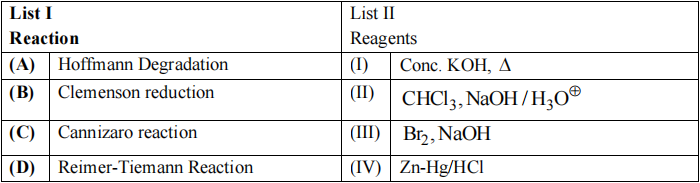
Match List I with List II.Choose the correct answer from the options given below:
The correct statement regarding nucleophilic substitution reaction in a chiral alkyl halide is :
Which among the following halide/s will not show \( \mathrm{S_{N}1} \) reaction: \((A)\) \(\text{H}_2\text{C}=\text{CH}-\text{CH}_2\text{Cl}\) \((B)\) \(\text{CH}_3-\text{CH}=\text{CH}-\text{Cl}\) \((C)\) \((D)\) Choose the most appropriate answer from the options given below:
Find out the correct statement from the options given below for the above \( 2 \) reactions.
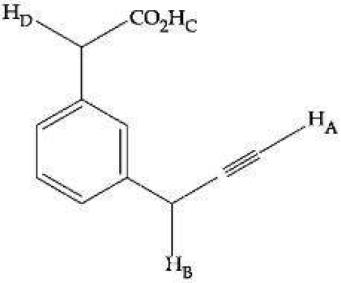
What is the correct order of acidity of the protons marked A – D in the given compounds?
In the following given reaction ‘A’ is:
Given below are two statements:Statement I: Benzene is nitrated to give nitrobenzene, which on further treatment with \( \mathrm{CH_3COCl} \) \( / \) \( \mathrm{AlCl_3} \) will giveStatement II: \( {-}\mathrm{NO_2} \) group is a m-directing, and deactivating group.In the light of the above statements, choose the most appropriate answer from the options given below:
For the reaction \( \text{RCH}_2\text{Br} + \text{I}^- \xrightarrow{\text{Acetone}} \underset{\text{major}}{\text{RCH}_2\text{I}} + \text{Br}^-\) The correct statement is:



 , the carbocation is stabilized by \( +R \) effect of \( -\mathrm{OCH}_3 \) group.
 , the carbanion is stabilized by \( -R \) effect of \( -\mathrm{NO}_2 \) group.





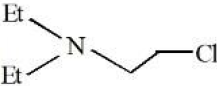 will undergo alkaline hydrolysis at a faster rate than
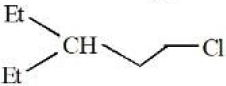
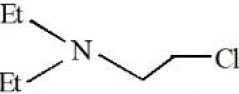 intramolecular substitution takes place first by involving lone pair of electrons on nitrogen.

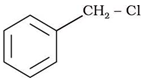 \((D)\)