If the function \( f(x) = \frac{e^{x}\left(e^{\tan x - x}-1\right)+\log_{9}(\sec x + \tan x)-x}{\tan x - x} \) is continuous at \( x = 0 \), then the value of \( f(0) \) is equal to:
From a lot containing \( 10 \) defective and \( 90 \) non-defective bulbs, \( 8 \) bulbs are selected one by one with replacement. Then the probability of getting at least \( 7 \) defective bulbs is:
Let \( f(t)=\int \frac{(1-\sin (\log_{e} t))}{(1-\cos (\log_{e} t))}\,dt,\; t>1 \). If \( f\!\left(e^{\pi/2}\right)=-e^{-\pi/2} \) and \( f\!\left(e^{\pi/4}\right)=\alpha e^{\pi/4} \), then \( \alpha \) equals:
If the domain of the function \( f(x)=\log_{(10x^{2}-17x+7)}(18x^{2}-11x+1) \) is \( (-\infty,a)\cup(b,c)\cup(d,\infty)-\{e\} \), then \( 90(a+b+c+d+e) \) equals:
The number of the real solutions of the equation \( x|x+3|+|x-1|-2=0 \) is:
Let $\alpha,\beta\in\mathbb{R}$ be such that the functionbe differentiable for all $x\in\mathbb{R}$. Then $34(\alpha+\beta)$ is equal to:
Let \( \vec{a} = 2\hat{i} + \hat{j} - 2\hat{k} \), \( \vec{b} = \hat{i} + \hat{j} \) and \( \vec{c} = \vec{a} \times \vec{b} \). Let \( \vec{d} \) be a vector such that \( \lvert \vec{d} - \vec{a} \rvert = \sqrt{11} \), \( \lvert \vec{c} \times \vec{d} \rvert = 3 \) and the angle between \( \vec{c} \) and \( \vec{d} \) is \( \frac{\pi}{4} \). Then \( \vec{a} \cdot \vec{d} \) is equal to:
The value of \( \dfrac{\sqrt{3}\,cosec 20^\circ - \sec 20^\circ}{\cos 20^\circ \cos 40^\circ \cos 60^\circ \cos 80^\circ} \) is equal to:
Consider an A.P.: \( a_{1}, a_{2}, \ldots , a_{n} ;\ a_{1}, > 0 \). If \( a_{2} - a_{1} = -\dfrac{3}{4} \), \( a_{n} = \dfrac{1}{4} a_{1} \), and \( \displaystyle \sum_{i=1}^{n} a_{i} = \dfrac{525}{2} \), then \( \displaystyle \sum_{i=1}^{17} a_{i} \) is equal to:
If \( \cot x = \dfrac{5}{12} \) for some \( x \in \left({\pi}, \dfrac{3\pi}{2}\right) \), then \( \sin 7x \left( \cos \dfrac{13x}{2} + \sin \dfrac{13x}{2} \right) + \cos 7x \left( \cos \dfrac{13x}{2} - \sin \dfrac{13x}{2} \right) \) is equal to:
Let \( R \) be a relation defined on the set \( \{1,2,3,4\} \times \{1,2,3,4\} \) by \( R = \{((a,b),(c,d)) : 2a + 3b = 3c + 4d\} \). Then the number of elements in \( R \) is:
Let \( S = \dfrac{1}{25!} + \dfrac{1}{3!23!} + \dfrac{1}{5!21!} + \ldots \) upto \( 13 \) terms. If \( 13S = \dfrac{2^{k}}{n!} ,\ k \in \mathbb{N} \), then \( n + k \) is equal to:
Let $S = \left\{ z \in C : \left\{ \left| \frac{z - 6i}{z - 2i} \right| = 1 \text{ and } \left| \frac{z - 8 + 2i}{z + 2i} \right| = \frac{3}{5} \right\} \right\}$. Then $\sum_{z \in S} |z|^2$ is equal to:
Let a circle of radius \( 4 \) pass through the origin \( O \), the point \( A(-\sqrt{3}\,a, 0) \) and \( B(0, -\sqrt{2}\,b) \), where \( a \) and \( b \) are real parameters and \( ab \neq 0 \). Then the locus of the centroid of \( \triangle OAB \) is a circle of radius:
Let \( 729, 81, 9, 1, \ldots \) be a sequence and \( P_n \) denote the product of the first \( n \) terms of this sequence.If \( 2\sum\limits_{n=1}^{40} (P_n)^{\frac{1}{n}} = \frac{3^{\alpha} - 1}{3^{\beta}} \) and \( \gcd(\alpha, \beta) = 1 \), then \( \alpha + \beta \) is equal to:
The mean and variance of a data of \( 10 \) observations are \( 10 \) and \( 2 \), respectively. If an observations \( \alpha \) in this data is replaced by \( \beta \), then the mean and variance become \( 10.1 \) and \( 1.99 \), respectively. Then \( \alpha + \beta \) equals.
Let each of the two ellipses \( E_1 : \frac{x^2}{a^2} + \frac{y^2}{b^2} = 1, (a > b) \) and \( E_2 : \frac{x^2}{A^2} + \frac{y^2}{B^2} = 1, (A < B) \) have eccentricity \( \frac{4}{5} \). Let the lengths of the latus recta of \( E_1 \) and \( E_2 \) be \( l_1 \) and \( l_2 \), respectively, such that \( 2l_1^2 = 9l_2 \). If the distance between the foci of \( E_1 \) is \( 8 \), then the distance between the foci of \( E_2 \) is:
Let \( A(1,0) \), \( B(2,-1) \) and \( C\!\left(\frac{7}{3}, \frac{4}{3}\right) \) be three points. If the equation of the bisector of the angle \( ABC \) is \( \alpha x + \beta y = 5 \), then the value of \( \alpha^2 + \beta^2 \) is:
Let the lines $L_1:\vec{r}=\hat{i}+2\hat{j}+3\hat{k}+\lambda(2\hat{i}+3\hat{j}+4\hat{k}),\lambda\in R$ and $L_2:\vec{r}=(4\hat{i}+\hat{j})+\mu(5\hat{i}+2\hat{j}+\hat{k}),\mu\in R$, intersect at the point $R$. Let $P$ and $Q$ be the point lying on lines $L_1$ and $L_2$, respectively, such that $\left|\overrightarrow{PR}\right|=\sqrt{29}$ and $\left|\overrightarrow{PQ}\right|=\sqrt{\frac{47}{3}}$. If the point $P$ lies in the first octant, then $27(QR)^2$ is equal to:
Let \( A_1 \) be the bounded area enclosed by the curves \( y = x^2 + 2 \), \( x + y = 8 \) and y-axis that lies in the first quadrant. Let \( A_2 \) be the bounded area enclosed by the curves \( y = x^2 + 2 \), \( y^2 = x \), \( x = 2 \), and y-axis that lies in the first quadrant. Then \( A_1 - A_2 \) is equal to:
The number of \( 3 \times 2 \) matrices \( A \), which can be formed using the elements of the set \( \{-2,-1,0,1,2\} \) such that the sum of all the diagonal elements of \( A^T A \) is \( 5 \), is ________.
Let \( (2\alpha,\alpha) \) be the largest interval in which the function \( f(t) = \frac{|t + 1|}{t^2} , \, t < 0 \) , is strictly decreasing. Then the local maximum value of the function \( g(x) = 2\log_{e}(x - 2) + \alpha x^2 + 4x - \alpha , \, x > 2 , \) is ________.
The number of numbers greater than \( 5000 \), less than \( 9000 \) and divisible by \( 3 \), that can be formed using the digits \( 0, 1, 2, 5, 9 \), if the repetition of the digits is allowed, is _______.
Let a line \( L \) passing through the point \( P(1, 1, 1) \) be perpendicular to the lines \( \frac{x-4}{4} = \frac{y-1}{1} = \frac{z-1}{1} \) and \( \frac{x-17}{1} = \frac{y-71}{1} = \frac{z}{0} \). Let the lines \( L \) intersect the \( yz \)-plane at the point \( Q \). Another line parallel to \( L \) and passing through the point \( S(1, 0, -1) \) intersects the \( yz \)-plane at the point \( R \). Then the square of the area of the parallelogram \( PQRS \) is equal to _______.
Let a differentiable function \( f \) satisfy the equation. If \( \int_{0}^{36} f\!\left(\frac{t x}{36}\right) dt = 4 \alpha \, f(x) \). If \( y = f(x) \) is a standard parabola passing through the points \( (2, 1) \) and \( (-4, \beta) \), then \( \beta^{\alpha} \) is equal to _____.

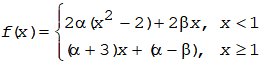 be differentiable for all $x\in\mathbb{R}$. Then $34(\alpha+\beta)$ is equal to: